
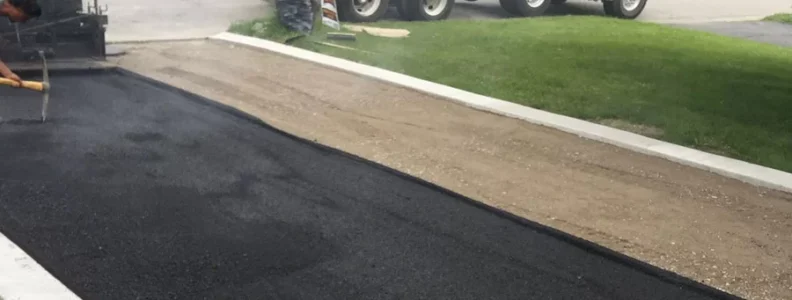
Choosing between asphalt and concrete is one of the most common decisions you’ll face as a homeowner when planning a new driveway. Both materials are widely used across Toronto and the GTA, but they differ in cost, upkeep, appearance, and how they perform over time.
This guide breaks down asphalt vs concrete driveway options by comparing pricing, durability, and maintenance needs. We also look at long-term performance to help you make an informed decision for your property.
Overview of Asphalt Driveways
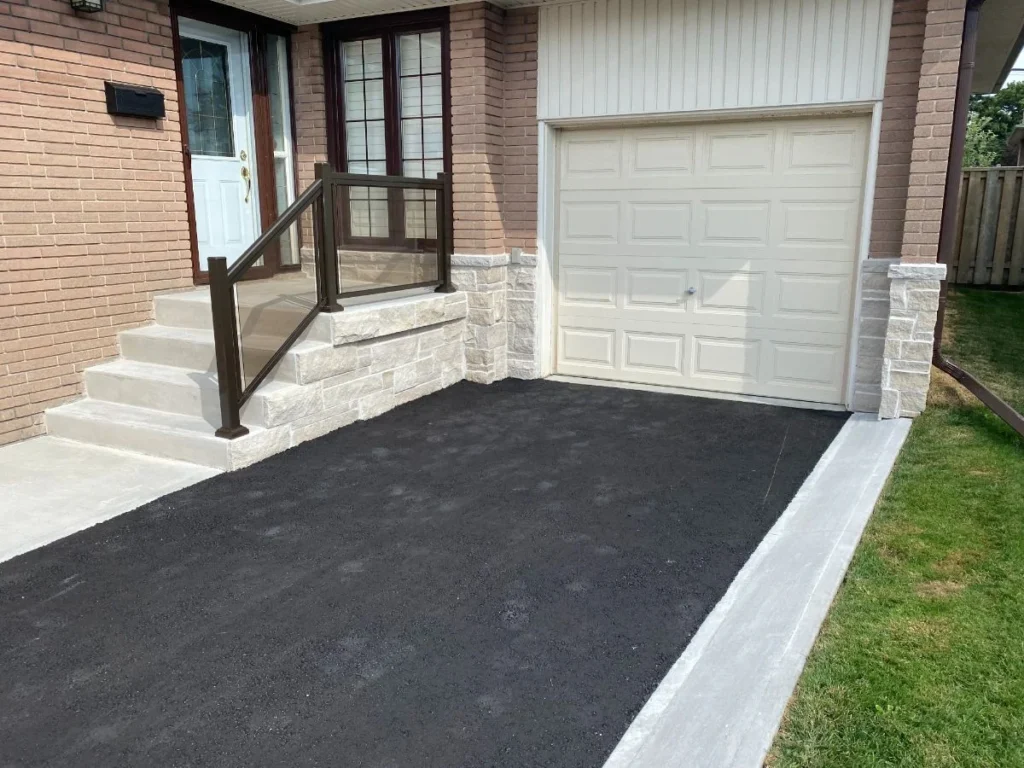
Asphalt is a popular choice for residential driveway paving due to its flexibility and faster installation.
Pros
- Lower upfront price compared to concrete
- Quick installation and curing time
- Handles freeze-thaw cycles well
- Easier and less expensive to repair
Cons
- Requires periodic sealing
- Shorter lifespan than concrete
- Can soften during extreme summer heat
These asphalt driveway pros and cons make it a practical option for homeowners focused on value and cold-climate performance.

Overview of Concrete Driveways
Concrete driveways offer a different set of benefits, particularly around longevity and appearance.
Pros
- Long service life
- Minimal routine maintenance
- Clean, uniform appearance
- Custom finishes available
Cons
- Higher installation cost
- Longer curing time
- Repairs are more noticeable
- Cracks can form if ground movement occurs
Understanding concrete driveway pros and cons helps balance visual appeal against cost and repair considerations.
Cost Comparison: Asphalt vs Concrete
One of the biggest differences in asphalt vs concrete driveway cost is the initial investment. Asphalt driveways typically cost less to install, making them attractive for larger surfaces. Concrete requires more labour and materials, increasing upfront pricing. Over time, sealing and resurfacing can narrow the gap, but costs still tend to favour asphalt at installation.
Durability & Lifespan
When comparing asphalt driveway lifespan vs concrete, asphalt generally lasts 15 to 20 years with routine care. Concrete driveways often exceed 30 years. This difference plays a key role how durable asphalt and concrete driveways are, especially for homeowners planning long-term ownership.

Maintenance Requirements
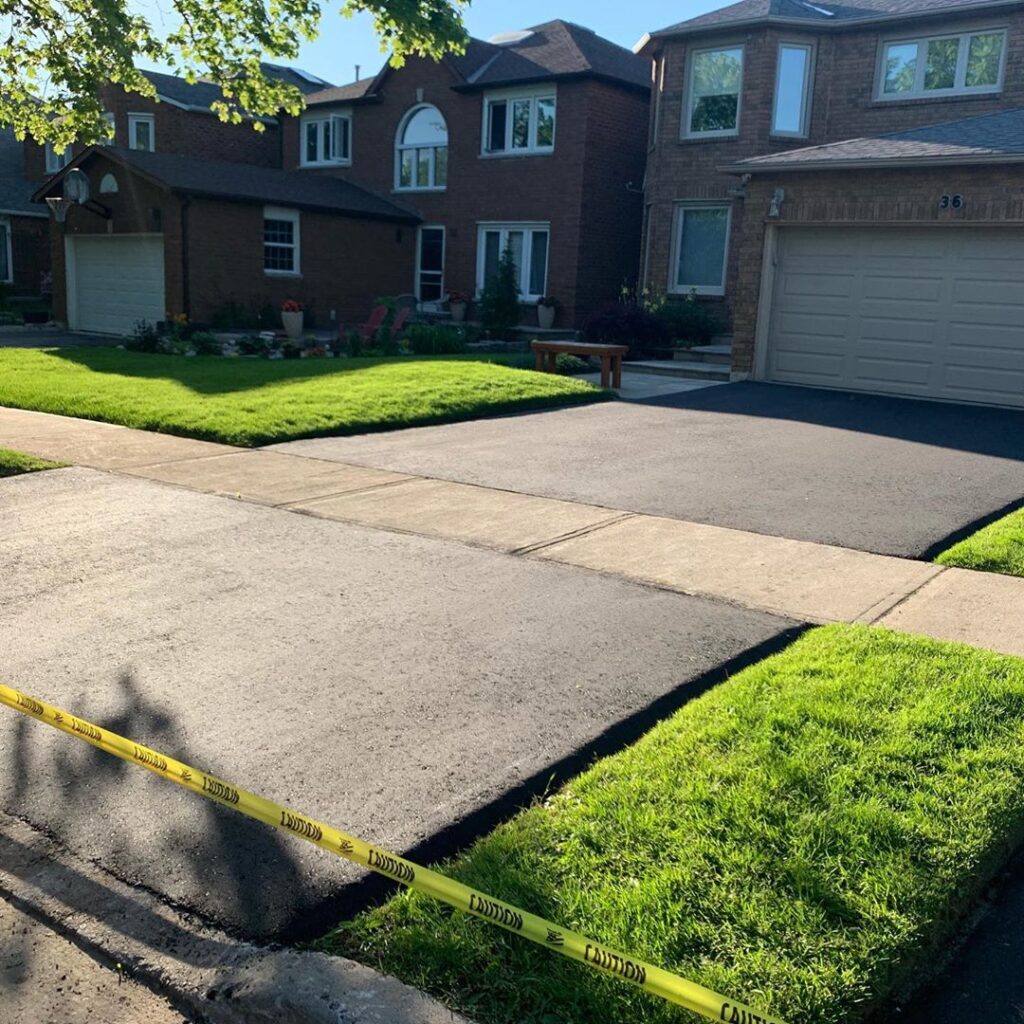
Maintenance differs significantly between driveway paving materials. Asphalt needs sealing every few years to reduce surface wear. Concrete requires less routine work but may need joint sealing and crack repair. Overall, maintenance of asphalt vs concrete driveways depends on usage, traffic load, and exposure to seasonal conditions.
Climate Performance
In Toronto, asphalt’s flexibility allows it to expand and contract more easily. Concrete is more rigid, which can lead to cracking if drainage or base preparation is lacking. This makes asphalt vs concrete driveway in cold climate comparisons especially important for GTA properties.
Appearance & Customization
Concrete offers more decorative options, including stamped patterns and coloured finishes. Asphalt delivers a uniform black surface that pairs well with most homes but offers fewer design choices. Appearance often influences driveway paving options when curb appeal is a priority.
Environmental Impact
Asphalt is recyclable and frequently reused in new paving projects. Concrete production involves higher energy use, though its longer lifespan offsets some environmental costs. Both materials have environmental considerations tied to sourcing and installation.
Which Is Better for Your Driveway?
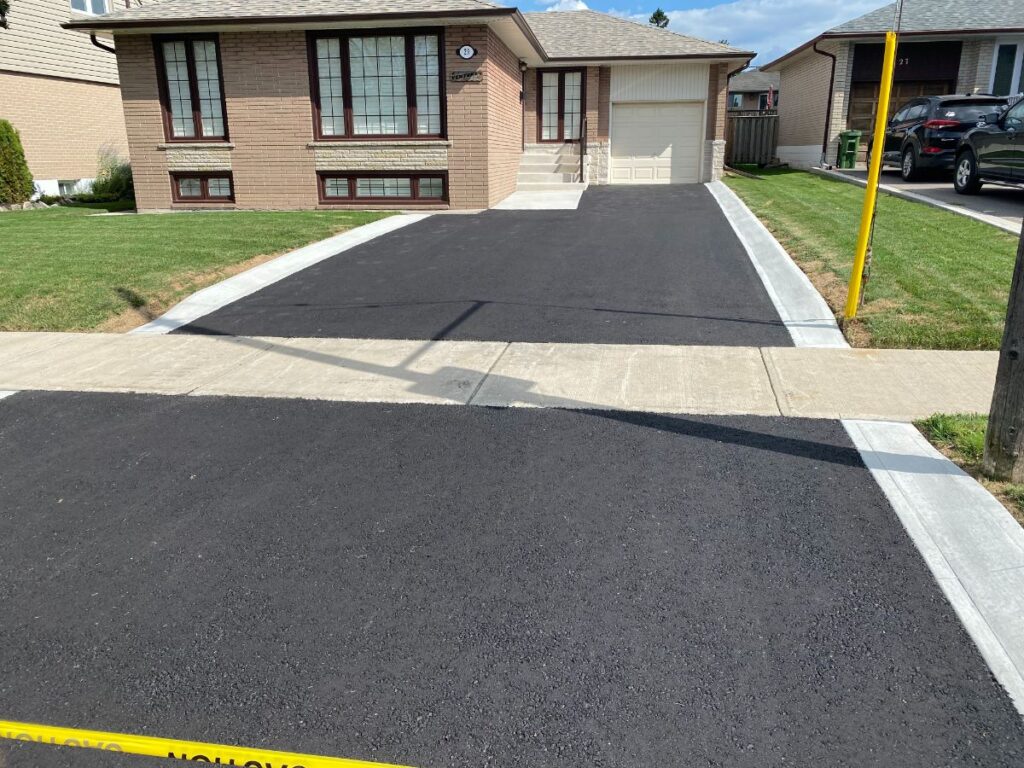
The answer depends on budget, long-term plans, and usage needs. Comparing asphalt vs concrete paving side by side helps clarify the trade-offs.
| Feature | Asphalt | Concrete |
| Initial Cost | Lower | Higher |
| Lifespan | 15–20 years | 30+ years |
| Maintenance | Regular sealing | Minimal |
| Cold Climate Performance | Strong | Moderate |
| Design Options | Limited | More variety |
For homeowners asking which is better asphalt or concrete driveway, this comparison provides a clear starting point.
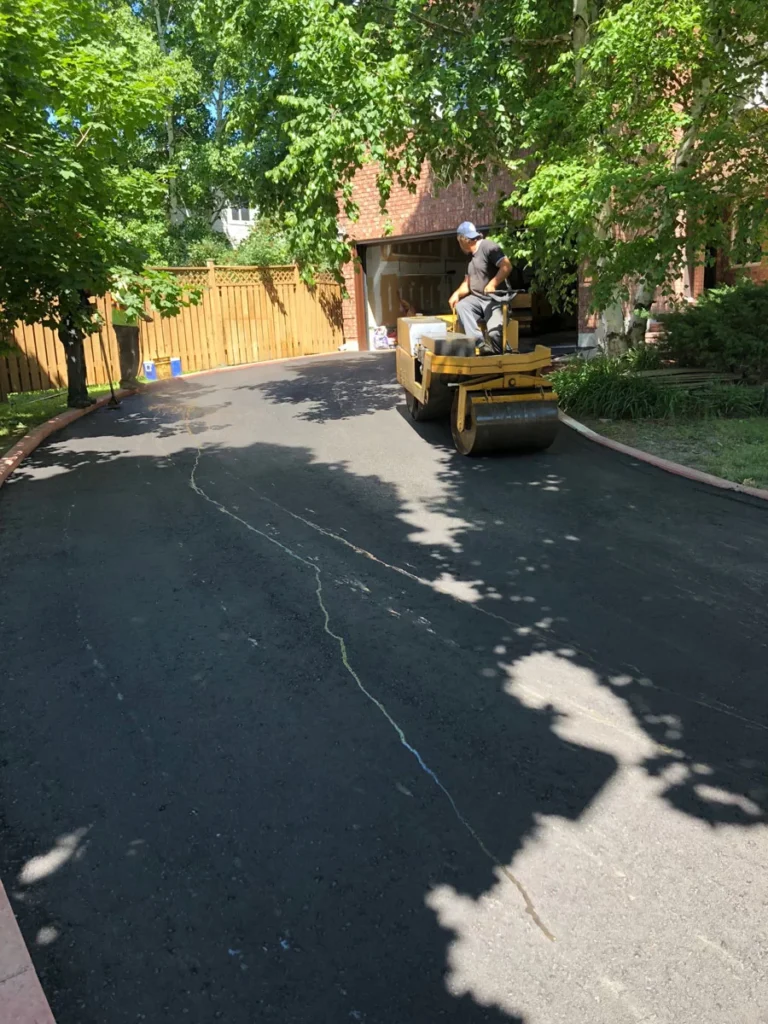
Asphalt Paving and Concrete Driveway Installation
Both materials remain reliable choices for residential driveway paving in the GTA. Asphalt offers affordability and cold-weather flexibility, while concrete delivers longevity and design options. For guidance on driveway paving materials and installation, contact VIP Paving today. Our team will review your property and help you plan your project goals.
FAQs
Concrete typically lasts longer than asphalt, often exceeding 30 years with basic care.
Asphalt generally handles freeze-thaw cycles better than concrete due to its flexibility.
Asphalt usually has a lower upfront cost than concrete, especially for larger driveways.